
Palo Alto
Sarah Winchester's Investments Near the Farm

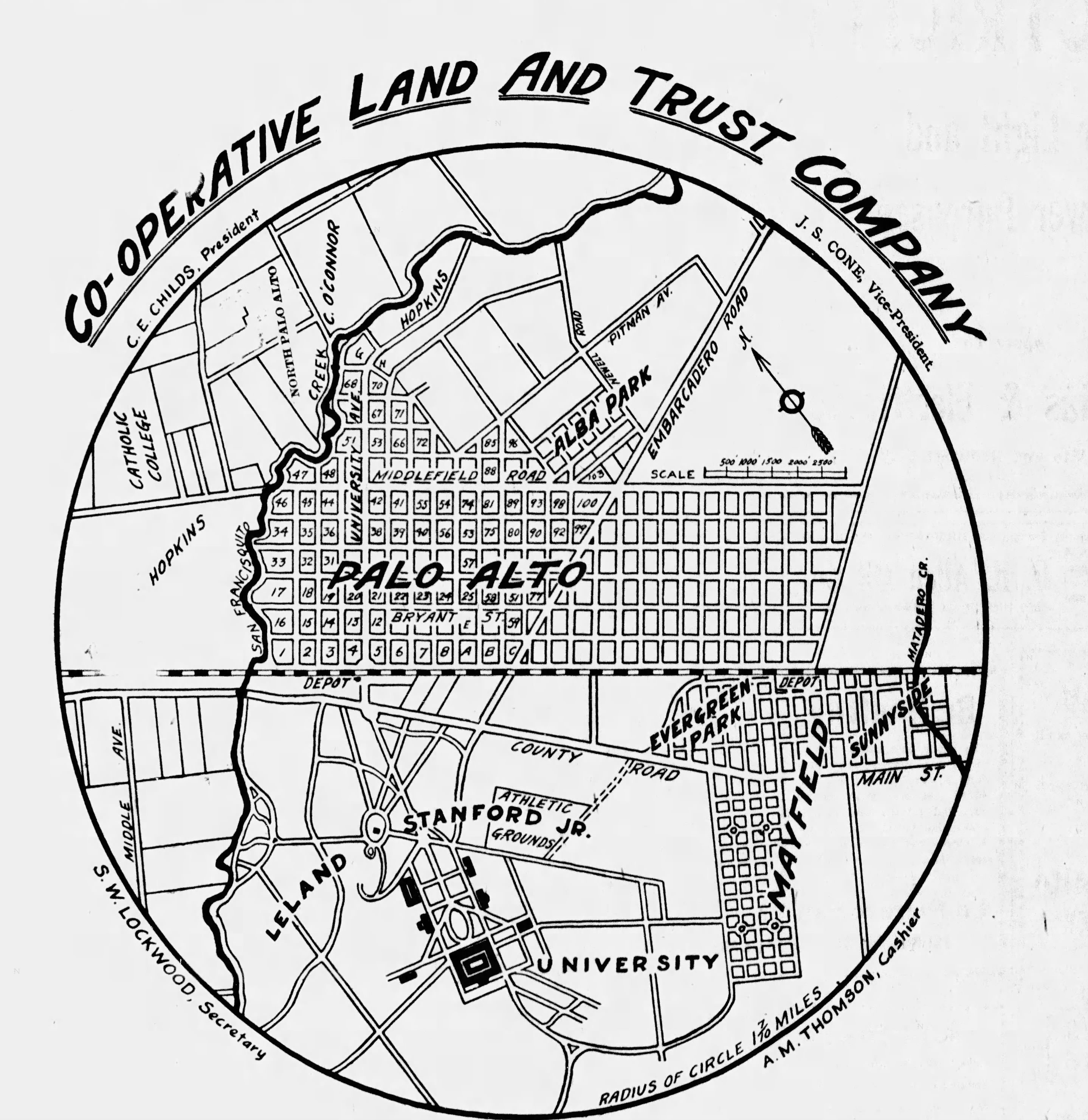
My book details many of Sarah Winchester’s real estate transactions (I’ve even created a spreadsheet), but the ones in Palo Alto didn’t get much mention. Between 1903 and 1907, Sarah Winchester purchased four properties in Palo Alto. The town had been incorporated in 1894 and sat right on the edge of Stanford University, but its growth spurt didn’t come until the turn of the century. The school’s cofounder, Leland Stanford, had died in 1893, and that, coupled with an economic depression, cast doubts as to whether the fledgling institution would survive. But by the time Winchester bought, Stanford University was on solid footing, and Palo Alto boasted 5,000 residents.
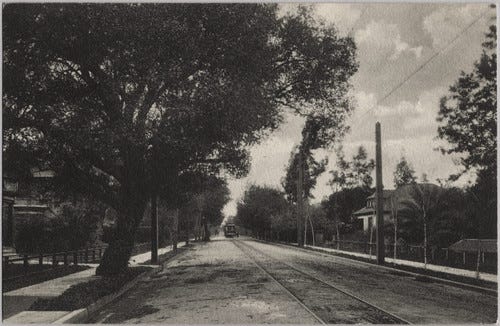
Of the four purchases, only one had a house—925 Waverly Street. It became the home of Daisy (Winchester’s niece) and Fred Marriott (no relation to the hotelier) for the next twenty years. It had been built in 1899, designed by Oakland architect Alfred W. Smith (1864-1933), and built by local contractor George W. Mosher (1863-1939). The house was Colonial in style, with a kitchen, dining room, parlor, and library on the first floor. Three bedrooms and a sewing room were upstairs.
Mosher was a large man, over 6 feet 2 inches and weighing about 225 pounds. He left a big imprint on Palo Alto and is credited with having built hundreds of buildings in the area. In 1903 alone, 125 houses had been built in the immediate Waverly neighborhood. He also served as town trustee.
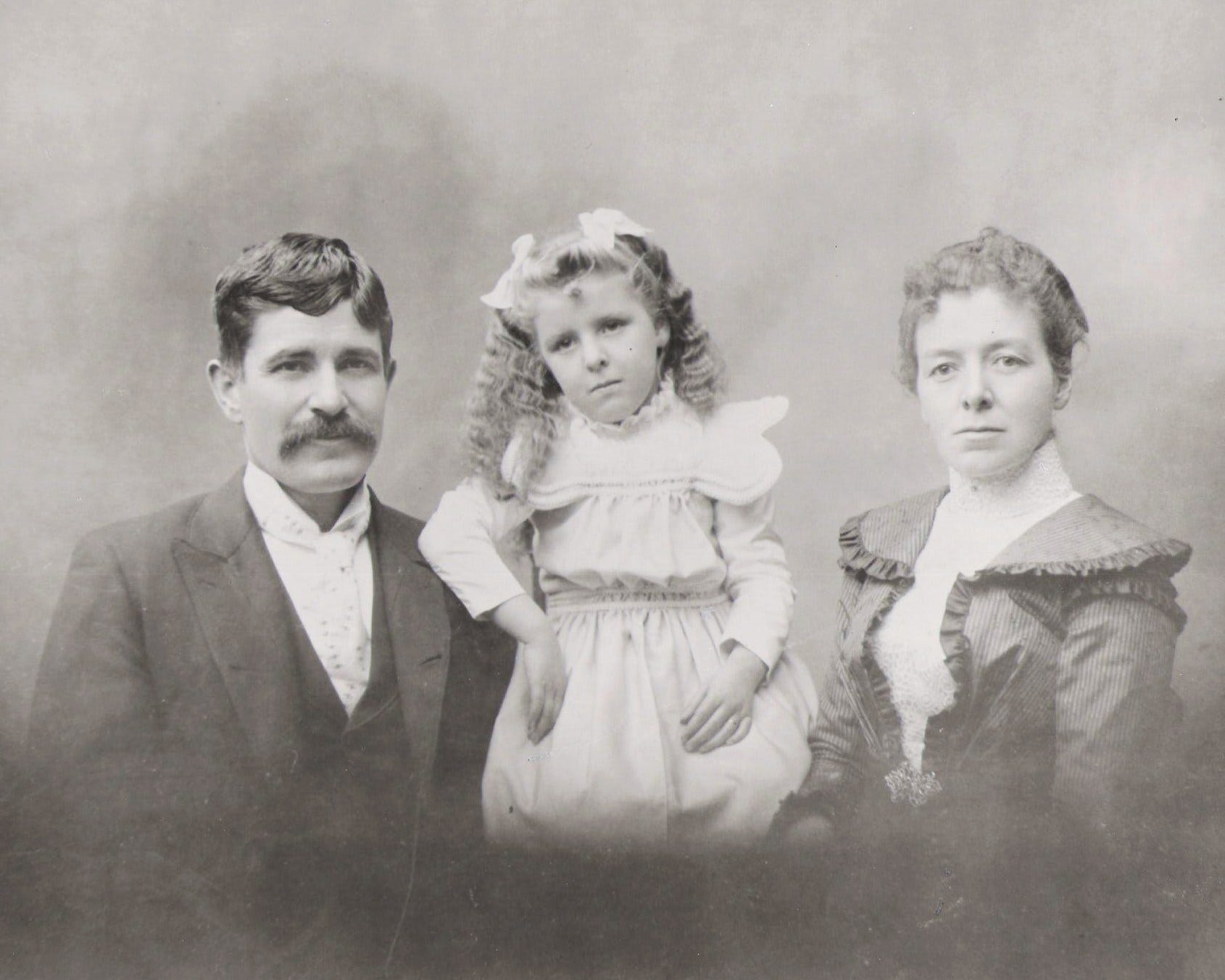
Daisy Marriott could visit her Aunt Sarah in Atherton frequently since it was only three miles away. Fred Marriott embraced his new life in Palo Alto, commuting by train to San Francisco and preaching the merits of the college town. He worked as an editor for various news outlets in San Francisco (including his father’s News-Letter) and he convinced the Overland Monthly to print a sixteen-page spread on the booming town of Palo Alto (September 1904). The magazine section did not carry Fred Marriott’s byline, stating simply that it was “A Compilation by the Editor,” but contemporary reports note Marriott’s work interviewing merchants, banks, and builders for the articles. He pointed out that Palo Alto was “dry” town (in contrast to the saloon-infested neighboring Mayfield) and emphasized its accessibility by train to business in San Francisco (of which he took full advantage). The articles are more boosterism than journalism. Palo Alto “is warmed by sunny rays that are tempered by gentle breezes wafted from the surface of the great and slumbering Pacific Ocean.” Wow. The weather alone, it seems, was enough to draw newcomers.
Sarah Winchester sold one of her four lots soon after she bought it in 1904. Another adjoined the Waverly house, and in 1907, she had a house built for her sister (Daisy’s mother) Isabel on Melville Avenue. Isabel made a special request. She asked that a “china closet” to match the one at the Waverly house, be installed. It is unknown if the feature was the brainchild of George Mosher, but it opened to the kitchen on one side and to the dining room on the other, making a pass-through for plates and goblets. Ingenious!
Sarah Winchester maintained ownership of both the houses, and when Isabel died in 1920, she sold it. Upon Winchester’s death, Daisy inherited the Waverly Street house. The Marriotts sold it and moved to a house on Lincoln Avenue in Palo Alto where they raised their grandson. Daisy and Fred Marriott both died in 1949.
Neither the Waverly house nor the Melville house has survived.